The ideas inside / Connections
The ideas inside. Eleven machines. Eight ideas.
Fig. A / A map of shared ideas Pick an idea. Follow the blue lines.
08 / Ideas 11 / Machines
01 Heat only moves from hot to cold 02 Metal grows when hot, so a switch can flip at one set point 03 A field that swings back and forth makes things wiggle and heat up 04 Waves get weaker the farther they go 05 Pressure changes the temperature where a liquid boils 06 Gravity pulls things down, and falling water can drag more water along 07 A very thin gap or layer can hold things back 08 Only the right match works Thermos flask Fridge Microwave Induction stove Iron Kettle Wi-Fi Toilet Ballpoint pen Non-stick pan Door lock Different objects. Tab to enter · Arrow keys to explore · Enter to select
Show all connections × Idea 01 / 4 machines
Heat only moves from hot to cold Heat always flows from the hot thing to the cold thing, by touch, moving air or glow, unless a machine pushes it the other way.
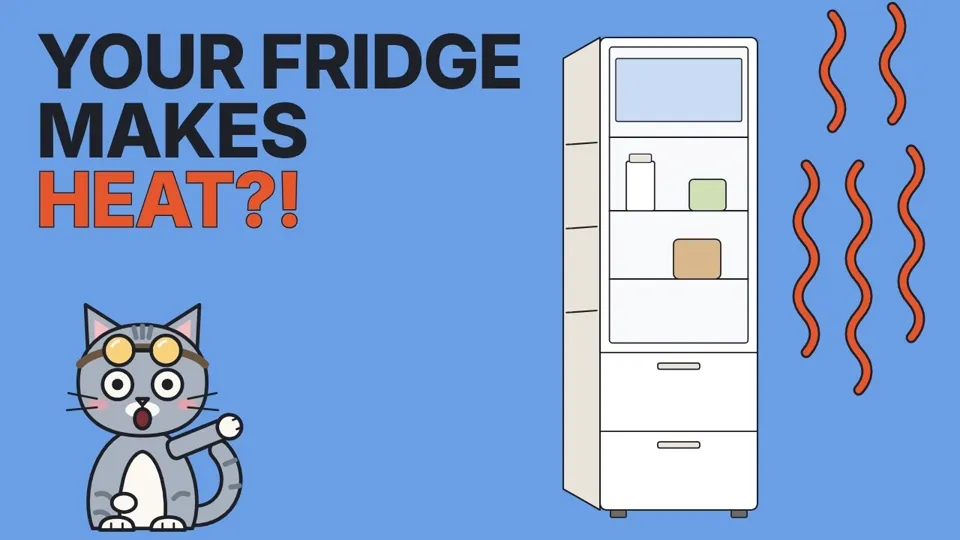
Fridge → A fridge has to push heat the other way, out of a cold box and into a warmer room.
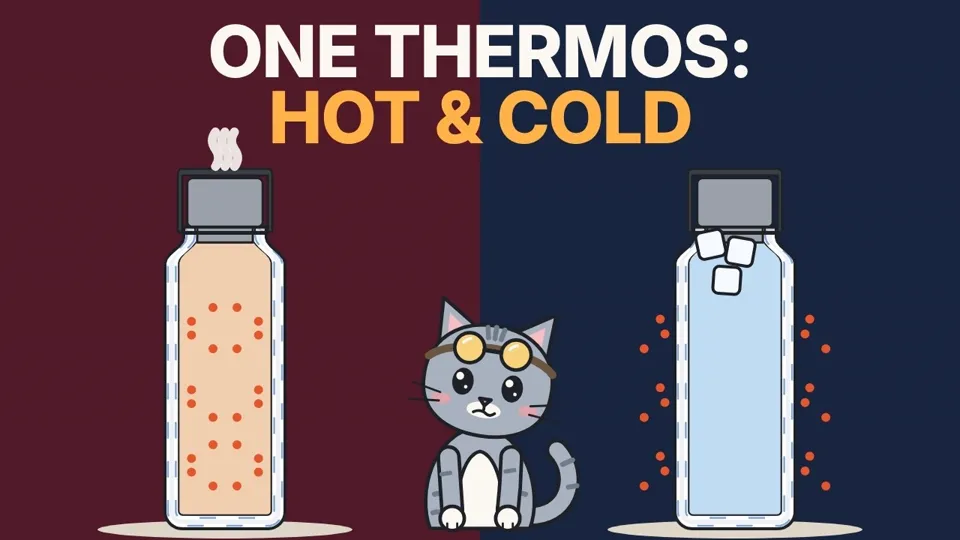
Thermos flask → Heat leaks out of hot soup and into ice water, because heat always moves from warm to cool.
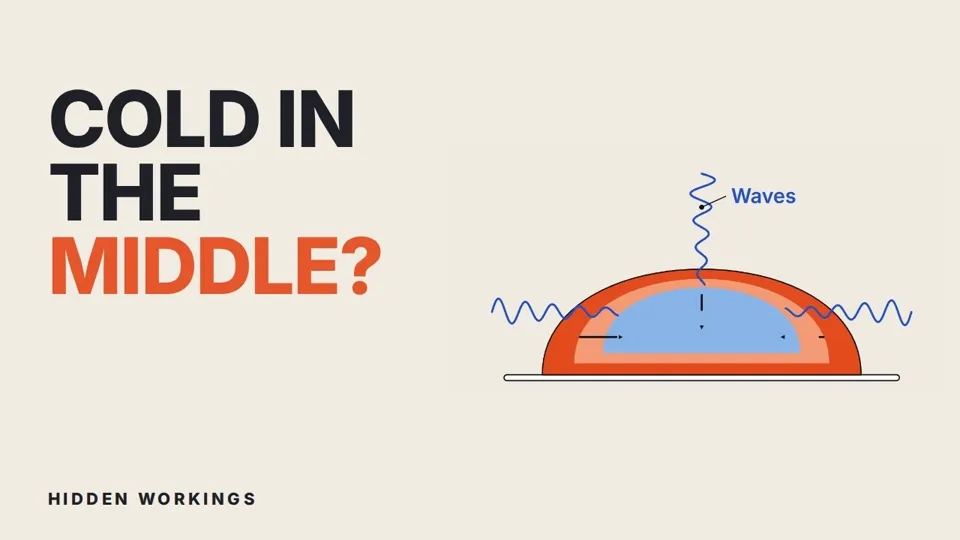
Microwave → The waves heat only the outer layer, and the middle warms as heat creeps inward from there, molecule to molecule.
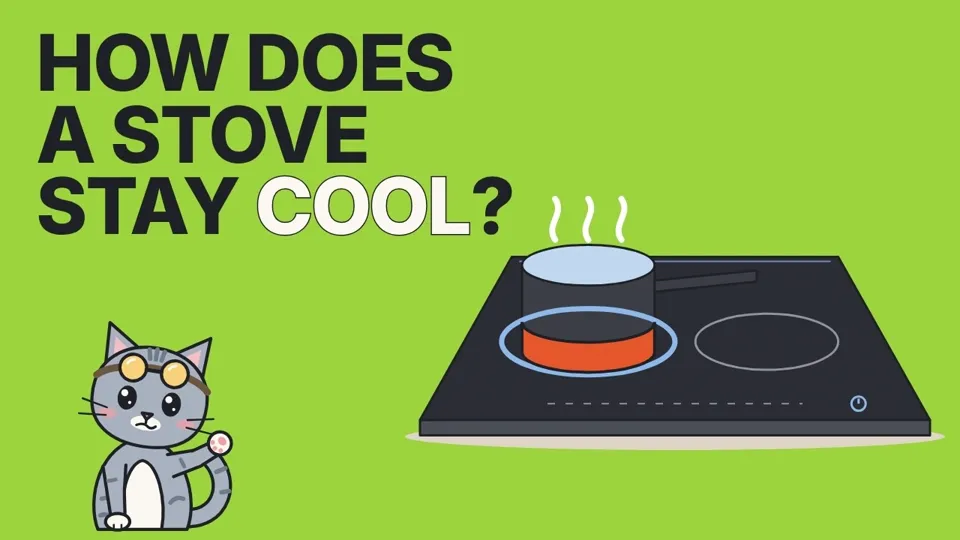
Induction stove → After cooking, the glass under the pan stays hot, because its heat came from the pan.
Idea 02 / 2 machines
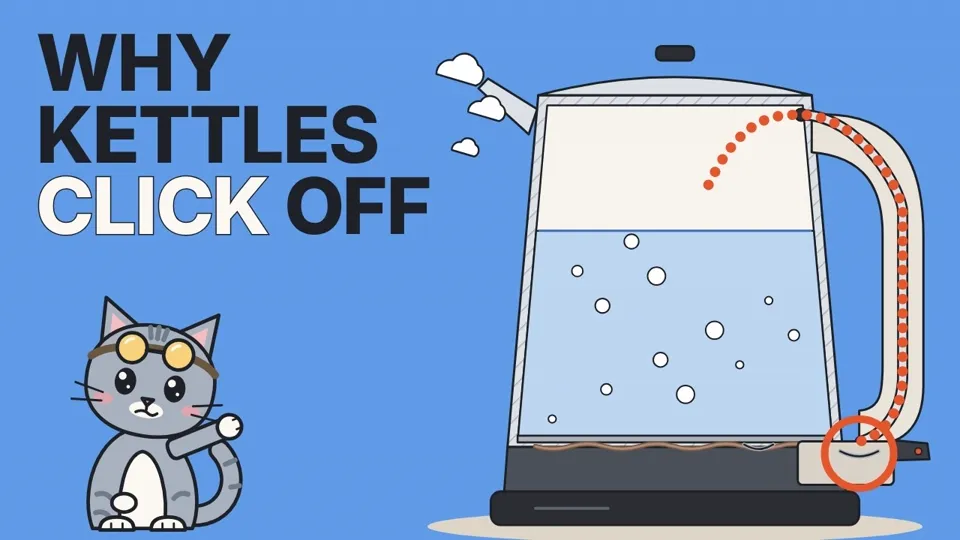
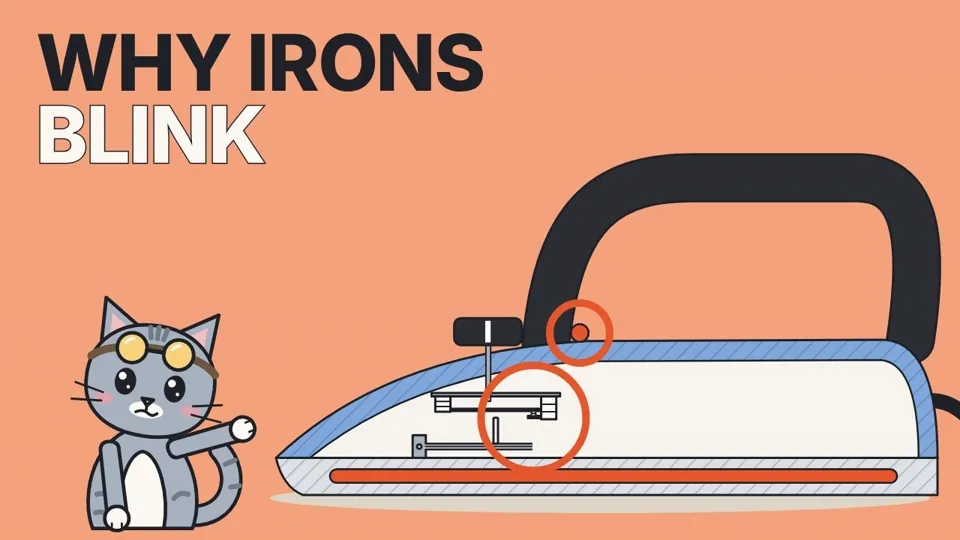
Metal grows when hot, so a switch can flip at one set point Two bonded metals grow by different amounts, so the pair bends and pushes a switch open once it gets hot enough.
Kettle → A small disc of two bonded metals bends until it snaps, and its snap point is set well below a hundred degrees.
Iron → When the plate warms, the strip bends and lifts a pin, so the contacts come apart and the heater switches off.
Idea 03 / 2 machines
A field that swings back and forth makes things wiggle and heat up When a field keeps swinging back and forth, it can shake the water in food or push electric current round inside metal, and both turn into heat.
Microwave → The microwave's electric field swings back and forth 2.45 billion times every second, and the waves heat food by shaking its water.
Induction stove → The coil's magnetic field swings back and forth about twenty-five to fifty thousand times every second, and it pushes current round inside the pan's metal.
Idea 04 / 2 machines
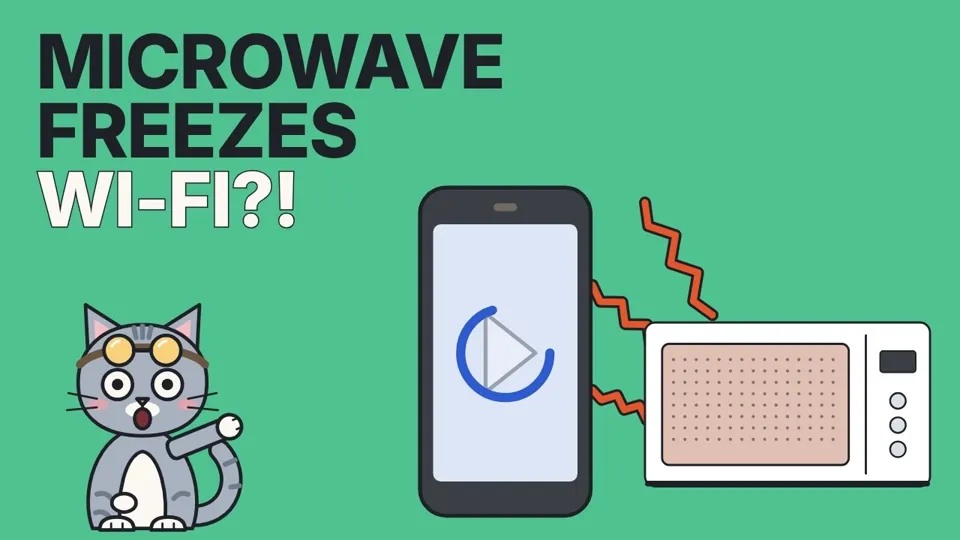
Waves get weaker the farther they go A wave spreads out and loses strength as it travels, and water, walls or other things in its path take a share of its energy.
Microwave → Every layer of water the waves pass through takes some of their energy, so in wet food about two thirds of their power is gone within a centimetre.
Wi-Fi → Double the distance, and your phone catches only a quarter as much, and walls take their share too.
Idea 05 / 2 machines
Pressure changes the temperature where a liquid boils Less pressure on a liquid makes it boil at a lower temperature, so water boils cooler on a high mountain.
Fridge → The boiling point depends on pressure, so inside the fridge the refrigerant boils at about minus twenty-five degrees, at a little over half of normal air pressure.
Kettle → The kettle waits for steam, and steam only comes at the boil, which is about ninety-five degrees sixteen hundred metres up.
Idea 06 / 2 machines
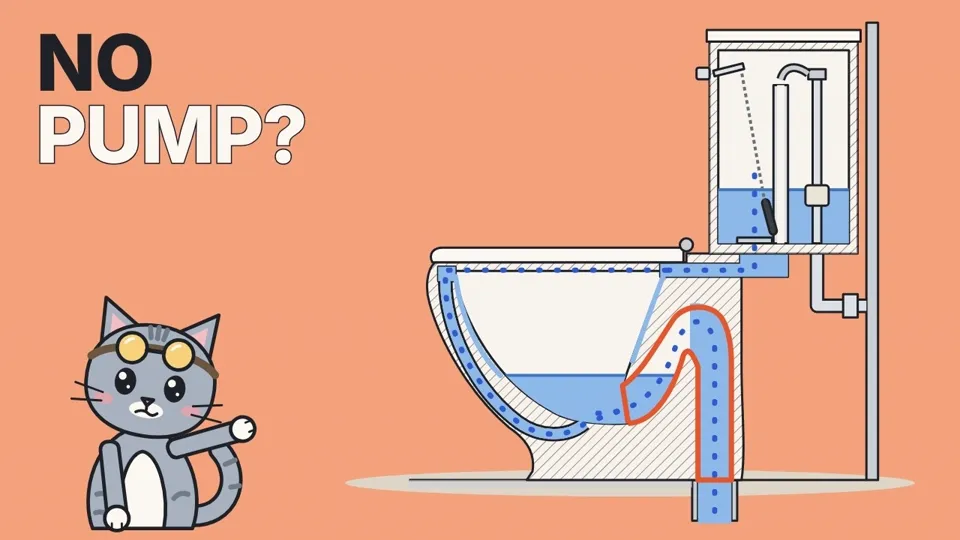
Gravity pulls things down, and falling water can drag more water along Gravity pulls water and ink downward, and once a pipe is full, falling water can pull the water behind it along.
Toilet → Once the pipe is full, falling water pulls the whole bowl after it.
Ballpoint pen → With the tip up, gravity pulls the ink down the tube, away from the ball, so the ball runs dry.
Idea 07 / 3 machines
A very thin gap or layer can hold things back A very thin gap or layer can slow heat down, hold ink in, or keep food off the metal.
Thermos flask → The gap between its two walls is almost empty, so touch and moving air can barely cross it.
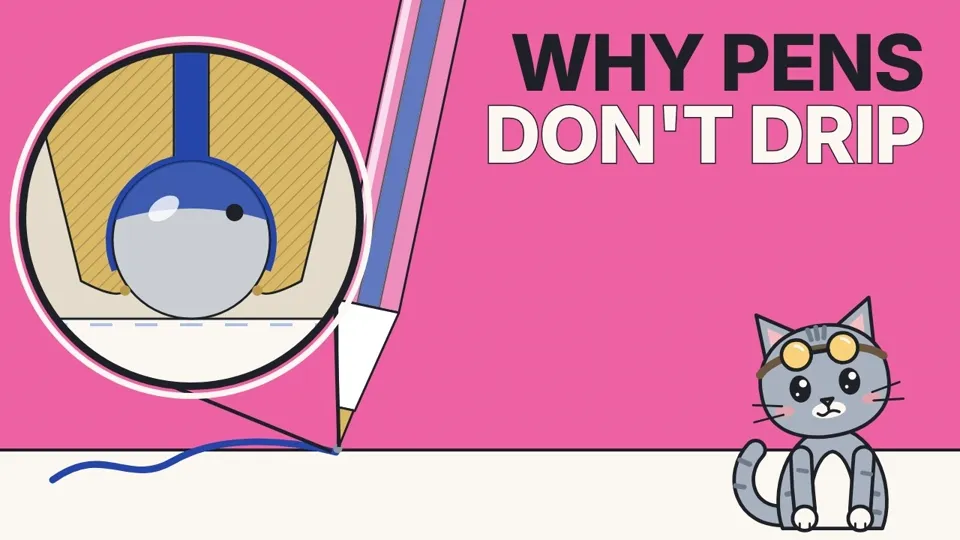
Ballpoint pen → The ball sits in the hole like a plug, with almost no room around it, and the gap is only a few thousandths of a millimetre.
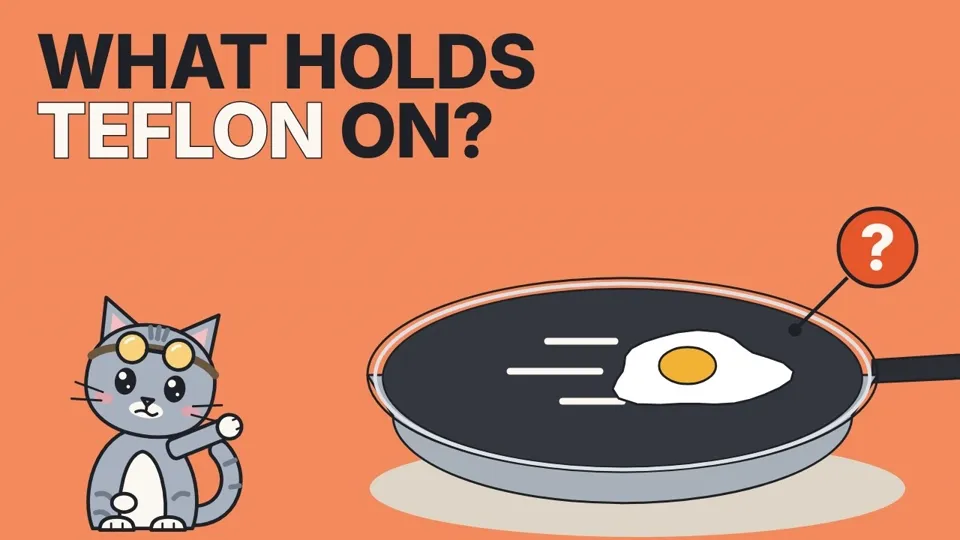
Non-stick pan → A deep scratch cuts down through the thirty-five microns of coating to bare metal, and bare metal pulls hard, so food grabs on.
Idea 08 / 2 machines
Only the right match works Some machines work only with the right match, like a key whose cuts all fit or a pan that a magnet sticks to.
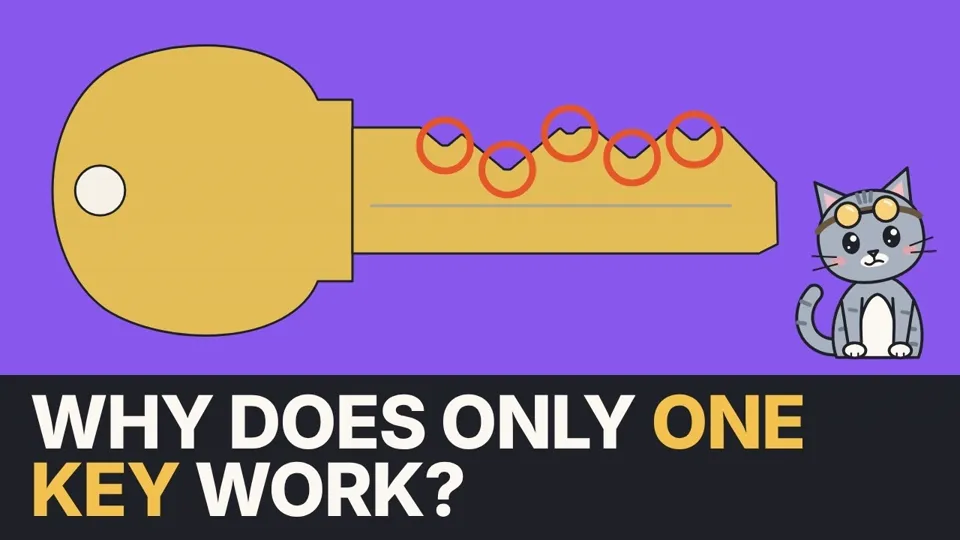
Door lock → The lock checks each cut on its own, and it turns only when every gap sits exactly on the line.
Keep following the connections
Same ideas.things to notice. There’s a clever idea in the next thing you pick up. See it from the inside.
Subscribe on YouTube ↗ Stay curious. We’ll bring the drawings.
 Fridge
 Thermos flask
 Microwave
 Induction stove