A thermos keeps hot soup hot. It keeps ice water cold. So how does it know which one you put in?
It doesn't. A thermos never knows if your drink is hot or cold. To see how it works, cut one open. Four questions guide the way: how does it know, why two walls, why shiny walls, and where does heat still get out?
Made for cold
The very first thermos was not made for drinks at all. In 1892, a scientist in London named James Dewar built it. He was making gases so cold that they turned into liquid, and he needed a jar that could keep them that cold. So he made a bottle inside a bottle, then took the air out from between them. His very first flask is still in a museum in London.
In 1904, a German company started selling these bottles for drinks. It called them Thermos, from the Greek word for heat. The name caught on so well that, in 1963, an American court said "thermos" was now just the everyday word for these bottles. One rival was even told to write it with a small t. That is how a company can lose its own name.
Guess
You pour ice water into a flask, close the lid, and leave it all day. Does it: A, get even colder; B, stay just as cold, forever; or C, slowly warm up? Pick one now and hold on to it.
Cools it?
The answer is C. The water slowly warms up. If you picked A, you are not alone. The label says the flask keeps drinks cold, so it sounds as if it cools them.
But there is no fridge in there. No battery, and no ice pack. Guess B cannot be right either, because nothing stops heat completely.
A thermos doesn't cool your drink. It slows down how fast heat gets in or out.
Both ways
So how can one bottle keep hot things hot and cold things cold? Heat always moves from warm to cool. Hot soup is warmer than the room, so heat leaks out of the soup. Ice water is cooler than the room, so heat leaks in.
Think of a crowded hall next to an empty one. People spill through the door to where there is space. Heat is like that crowd. A thermos nearly closes the door, and it does not care which way the crowd is going. There is one difference. People can choose to stay put. Heat cannot. It keeps moving until both sides are the same temperature.
Three ways
Heat gets out of a plain mug in three ways.
The first way is touch. The hot coffee warms the mug, and the mug warms your hand. The second way is moving air. Air touching the coffee warms up and rises, carrying the heat away. The third way needs no touch at all. Hold your hand beside the mug, and you can feel the warmth. Warm things give off a light our eyes cannot see, and our skin feels it as heat.
A plain mug lets all three out. A thermos has to stop all three.
Two walls
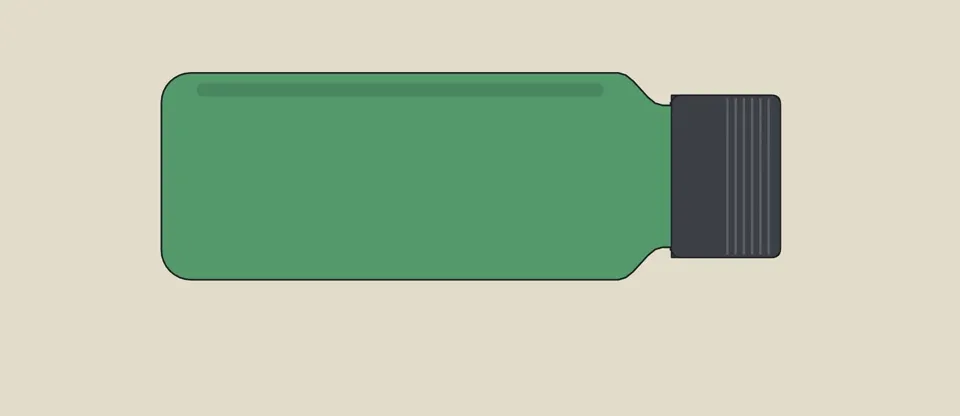
Here is a steel flask, cut in half. There is a wall inside a wall. The outer wall is the one you hold, and the inner wall holds the drink. Between them is a thin gap, which can be emptied of air. The two walls meet only at the top, at the neck.
The gap
Why is the gap empty? If it were full of air, the air would carry heat across. Air is made of tiny bits that bump into each other, and they pass the jiggle along. So the makers take the air out and seal the gap shut. Now there is almost nothing left to bump, and almost no air left to move.
The gap is almost empty, so touch and moving air can barely cross it.
The glow
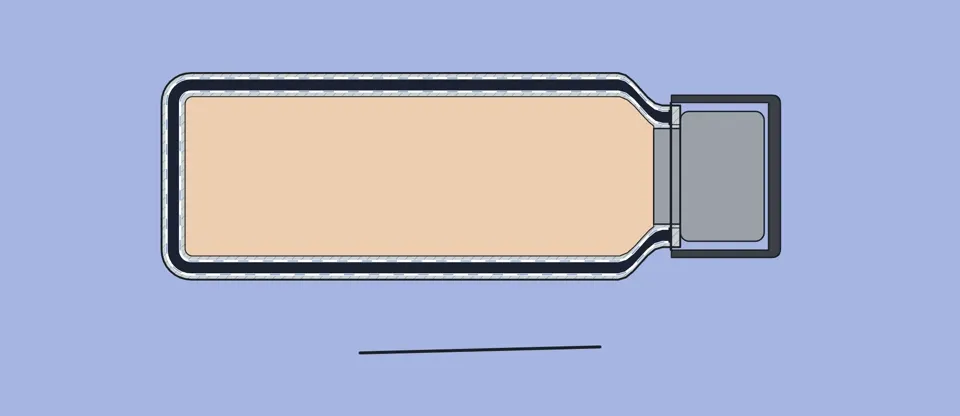
An empty gap does not stop everything. Glow does not need air. It crosses empty space easily, which is how the Sun warms your face. So in a flask, the hot inner wall still glows across the gap.
That is why the walls are shiny. The walls on the inside of the gap work like mirrors. A dull wall would soak up the glow and warm up. A shiny wall sends most of it back.
Shiny walls bounce the glow back across the gap.
Suppose there is hot coffee in the flask. Which way does its glow go? It goes out, from the hot wall toward the room. With ice water inside, the glow comes in, from the warm room toward the cold water.
If you thought no glow reaches ice water, think again. Warm things glow more than cool things. So the warm side sends more glow to the cool side than the cool side sends back. And the shiny walls bounce it back both times.
The neck
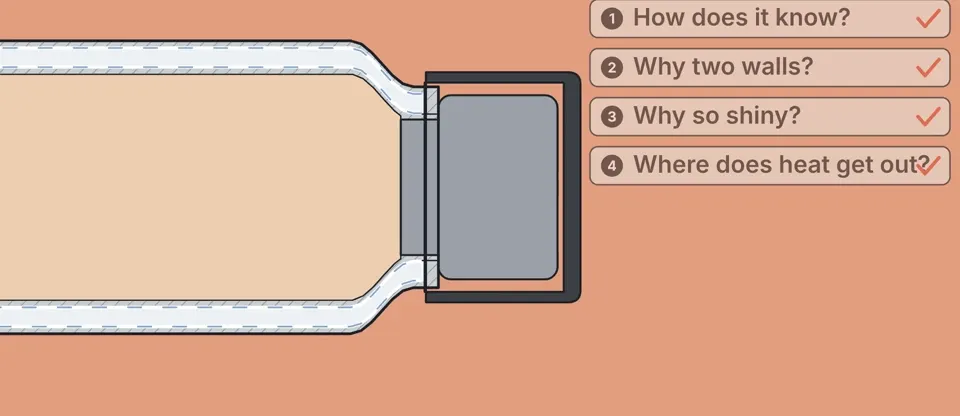
Where does heat still get out? There is one place with no gap: the neck. At the top, the two walls join, and heat can creep through that join by touch. The lid is a solid plug, and heat creeps through it too.
Picture the lid off. Warm air rises straight out of the open neck. The neck and lid are the weak spot, so keep the lid on.
How long?
One maker tested its flask. It filled the flask with water at 95 degrees Celsius, in a room at 20 degrees. After one hour, the water was still about 88 degrees. After six hours, about 73. It is still hot, but it is cooling, slowly.
The maker's cold test starts with water at 4 degrees. After six hours, it is still at 8 degrees or below.
Try it
Use cold water only. Fill a steel flask and a plain glass with the same fridge-cold water. Close the flask, leave the glass open, and touch both after an hour.
The glass is cold, and usually wet on the outside. Its outside is cold, so water from the air sticks to it. A cold outside also means heat from the room is pouring in through the glass.
The flask did not cool the water. It just kept the heat out. If you have a kitchen thermometer, check both after six hours. The water in the flask should have warmed by only a few degrees.
In one breath
A thermos does not know whether your drink is hot or cold. It only slows down how fast heat gets in or out, using an almost empty gap and shiny walls that bounce the glow back. The neck and lid are where heat still escapes, so keep the lid on.