Press the handle, and water rushes in. Within seconds the bowl is empty, with a gurgle at the end. Yet most toilets have no pump.
Now try a bucket. Pour the water in slowly, and nothing happens. Pour it in fast, and the toilet flushes. So what is doing the pulling?
The stink trap
Toilets did not always keep their smells in. The pipe ran down to a smelly pit, and the smell came back up.
In 1775, a London watchmaker named Alexander Cumming patented a fix. He bent the pipe under the bowl into an S. Water sat in the bend and blocked the smell. He called it the stink trap. Your toilet still has one, and that same bend is what pulls the water down.
Slow or fast?
Picture a bucket of water, with your water supply off. You pour it into the bowl.
Which one flushes? A: pour it slowly. B: pour it all at once. C: both flush. Hold your guess.
A push?
It looks as if the tank simply pushes everything down. Old toilets used as much as six gallons a flush. Yet a bucket holds the same water, and poured slowly, it does not flush at all. The tank's rush helps, but it is not what empties the bowl.
So is there a pump? Not in most toilets. There is no motor, and no plug for one. Is the sewer sucking the water away? No. The drain pipe is open to the air, so nothing down there pulls. That settles the first question.
Inside
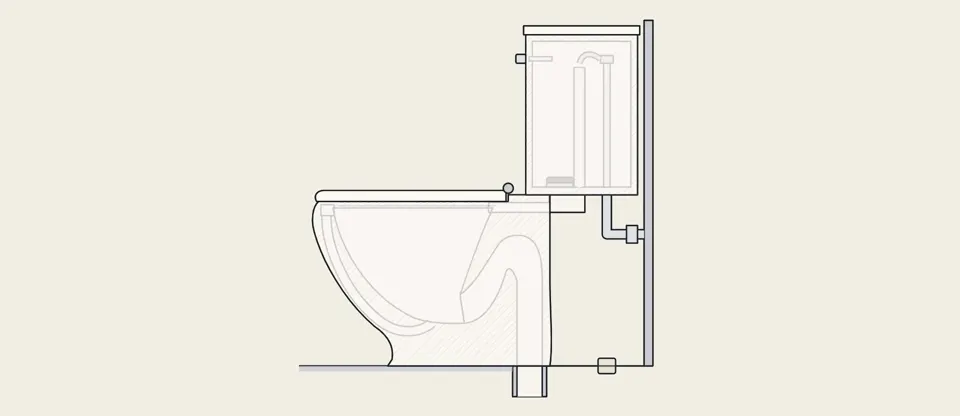
Here is the toilet, cut in half. At the back is the tank, which holds the flush water. In front is the bowl. Hidden in the china behind the bowl is a bent pipe. It rises from the bottom of the bowl, arcs over a bend, and drops down to the drain. That is Cumming's S bend.
The water level
The top of the bend sets how high the water can go. The water in the bowl and the water in the pipe sit at one level. It cannot rise above the top of the bend. Any more just spills over and runs down the drain.
The top of the bend decides the water's height.
The water left in the bend has one more job. Sewer gas comes up the drain and meets the water, and it cannot get past. That water is the seal. Building codes ask for at least two inches of it.
Slow and fast
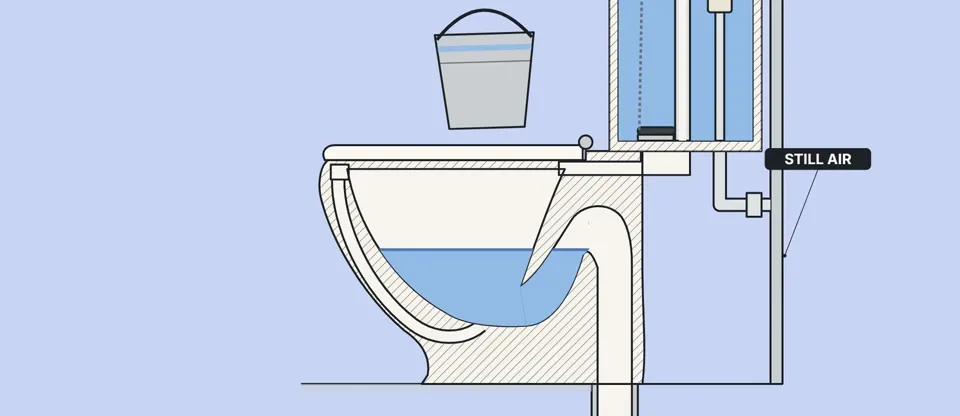
Back to the bucket. Pour it slowly. The water in the bowl rises a little, reaches the top of the bend, and spills over in a thin stream down the far side. Keep pouring, and it keeps spilling.
A slow pour just spills over the bend, so nothing flushes. The bucket is empty, and the bowl looks just the same.
Now pour the same water all at once. The bowl rises fast, and water floods over the bend, more than can trickle away. The far side of the pipe fills right up, with no air left in it. Then the bowl empties, nearly all of it, in a few seconds.
So the answer is B. If you guessed C, that makes sense, because it is the same water. But only the fast pour fills the pipe.
The pull
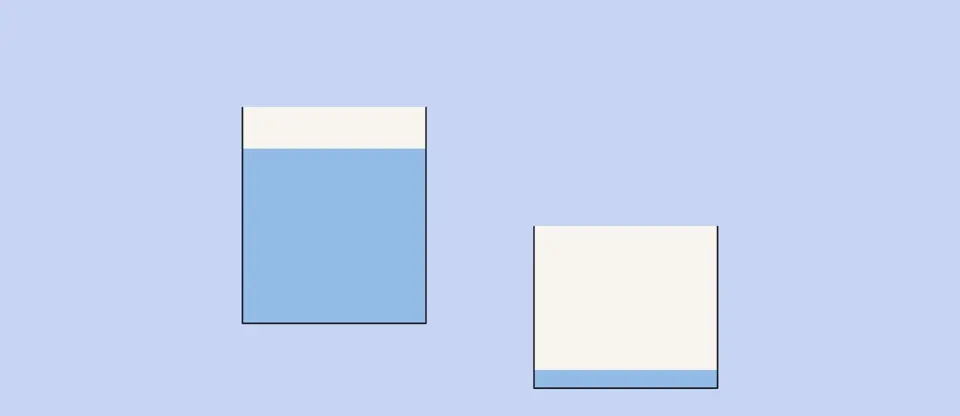
Why does a full pipe empty the bowl? Picture two tubs, one higher than the other, and a bent tube. Put the tube in empty, full of air, and nothing happens. Now fill the tube with water first. The water runs up, over the top, and down into the low tub. It keeps going on its own, until the two water levels match. This is called a siphon.
Think of a chain on a table, with one end hanging over the edge. The hanging part falls, and drags the rest after it. In the tube, the long side going down is like that hanging part. Its water falls and pulls the water behind it up and over.
Why does the long side win? Because its end is lower. Its water falls farther than the other side has to climb. But water is not a chain. It holds together only while the tube is full. One gap of air, and it lets go.
The flush
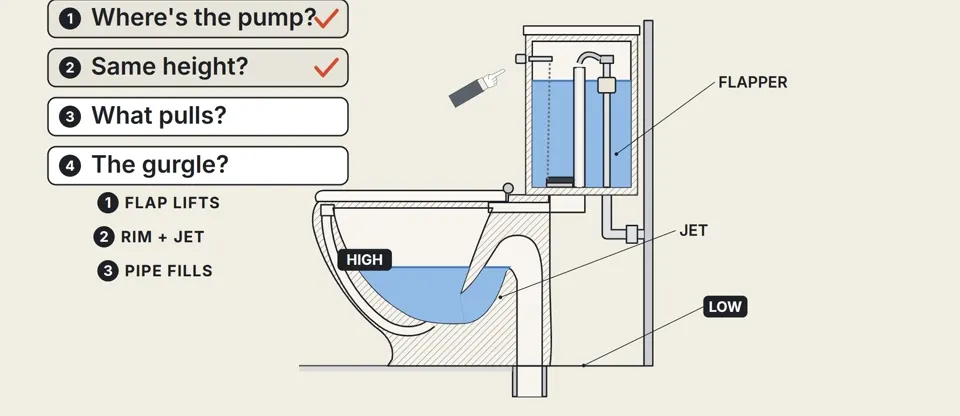
The bowl is the high tub, and the drain is far below. Press the handle, and a flap at the bottom of the tank lifts. Water rushes down, out of holes under the rim. In many toilets, a jet at the bottom adds more. The bowl rises, and the far side of the pipe fills.
Once the pipe is full, falling water pulls the whole bowl after it.
The gurgle
Why does it stop? The pull drags the bowl water lower, until the water drops below the mouth of the pipe. Air rushes in, the pipe is no longer full, and the pull breaks. That gurgle is the toilet taking a gulp of air.
The refill
Now the bowl is low, and its seal is thin. The tank fills up again, and a small tube sends a trickle into the bowl. The bowl rises back to the top of the bend, and the seal is back.
That is one whole flush: fill the pipe, pull, gulp of air, refill.
Not every toilet
In many countries, especially in Europe, lots of toilets are washdown toilets. Their bend is wide and plain. It does not fill up to pull, and there is no siphon. The rush from the tank just pushes things through. So the pull is not the only way. But it is why a siphon bowl empties so completely.
Try it
Over a sink, fill a bendy straw with clean tap water and pinch both ends. Put one end in each of two glasses, with one glass about ten centimetres lower. Never start it by sucking.
Let go, and the water runs up and over by itself. Lift the low glass until the levels match, and it stops.
A slow tank
What if the tank let its water in slowly, a trickle at a time? Would the toilet still flush? No. The water would spill over the bend, bit by bit, and the far side would never fill. No siphon would start.
If you said yes because it is the same water, look again. It is the speed that fills the pipe. Same water, poured slowly, and it fails.
In one breath
A toilet has no pump. Its bent pipe sets the water level and blocks the smell, and a fast rush fills that pipe. Then falling water pulls the bowl empty until air gets in with a gurgle.