You set your iron to one heat. Yet its little light keeps going off, and on. Off. On. So how does it stay at the same heat?
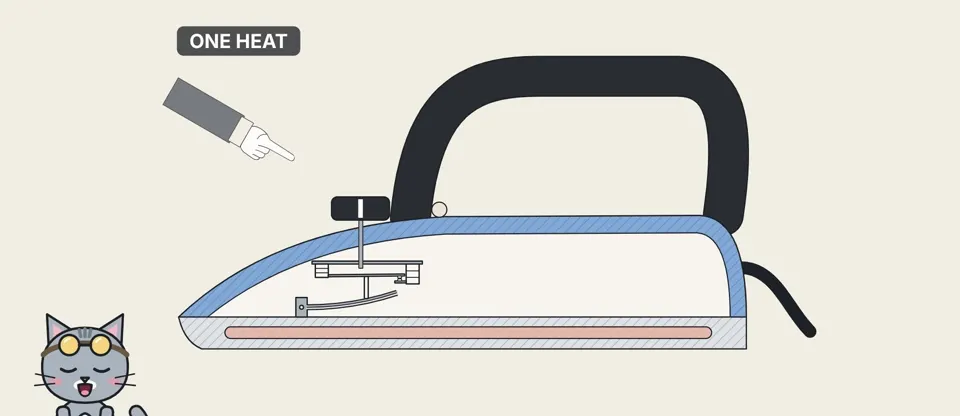
Open one up and you can see what is switching.
Before thermostats
Irons did not always know when to stop. A hundred years ago, many irons were heated on a stove, and when one cooled, you swapped it for a hot one. There was no thermostat. In one British home, a mother held the iron close to her cheek, or licked a finger and touched it. Please never test an iron that way. And if the iron was too hot, it scorched the cloth.
Electric irons came next. One early design, from 1882, even plugged into a light socket, but it had no thermostat, so nothing switched it off. In 1925, an inventor called Joseph Myers filed a patent for what he called a self regulating flatiron: an iron that switches itself.
A dimmer?
So what does the dial do? Say you turn it from one dot to three dots.
Does more power flow into the heater, does the same power flow for more of the time, or is it something else? Pick one before you read on.
Surely the low setting just sends less power, like a dimmer switch on a lamp. But then the heater would never switch off, and its light would never go out. Yours does, and when it goes out, the power drops to nothing, not to half.
Measure a real iron to see it. With the light on, the heater takes its full power, about a thousand watts or more. With the light off, it takes zero. Then full again. Then zero.
The heater is never half on. It is fully on or fully off.
On most irons, the light shows you when the heater is on. But what does the switching?
Inside
At the bottom is the soleplate, the metal plate that touches your clothes. Inside it runs the element, a wire that gets hot. On top of the plate sits the thermostat, the switch that turns the element on and off. Above it is the dial you turn.
The bending strip
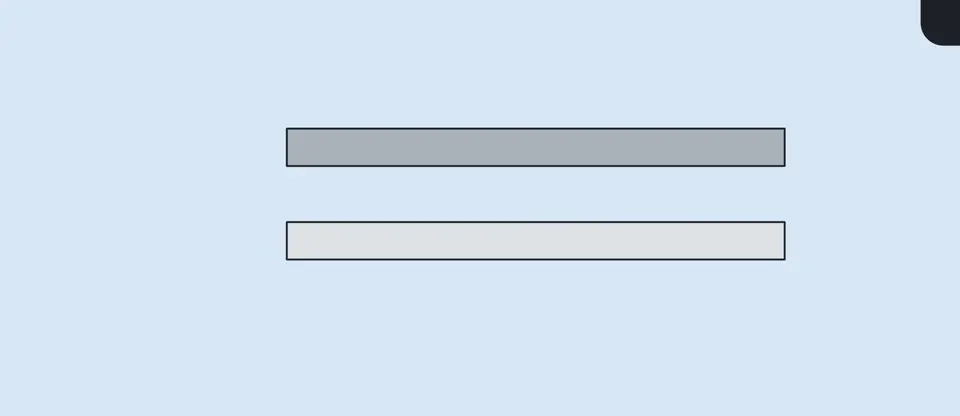
But how can a switch tell that it is hot? Take two bars of different metals. At room heat, they are the same length. Warm them, and one grows more than the other. Join them into one strip, and they cannot slide apart, so the strip has to bend. Cool it, and it straightens again.
Joined together, two metals don't just grow, they bend.
This idea is old. John Harrison used a strip like this in a sea clock, around 1759, and it is still in thermostats all over the world.
The switch
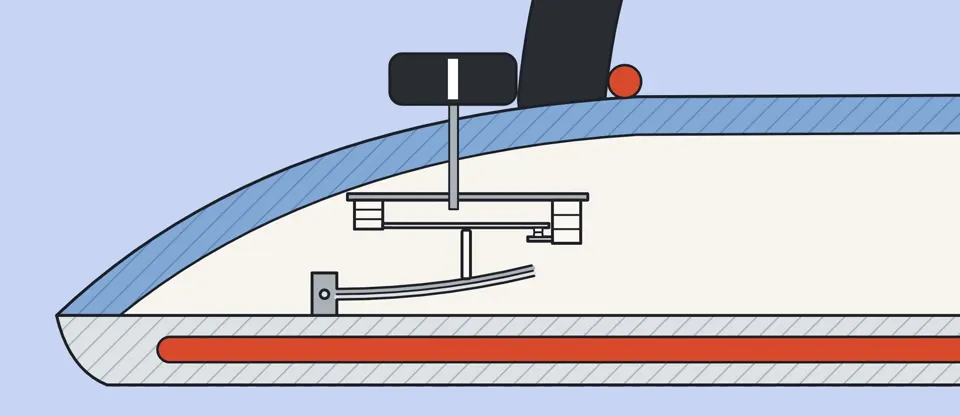
Here is that strip, lying just above the soleplate. Above it are two metal points that touch: the contacts. The power for the element flows through them, so while they touch, the heater is on. Between the strip and the contacts sits a little pin.
When the plate warms, the strip warms and starts to bend. It lifts the pin a tiny bit at a time. The pin pushes up on a springy arm, and the contacts come apart. The power stops, the element stops heating, and the light goes out.
Now the heater is off. The plate cools a little, and the strip straightens. The pin drops, the contacts touch again, and the light comes on. Why use a strip at all? It needs no battery and no chip. The heat itself moves it. It never holds the heat. It chases it.
So the iron goes round and round: heat, bend, off; cool, straighten, on. The plate's heat climbs to the setting, then wobbles around it. Each time the light goes off and on, that is the strip at work. That is what Myers meant by self regulating. Some newer irons use a small electronic sensor instead, but the idea is the same.
The dial
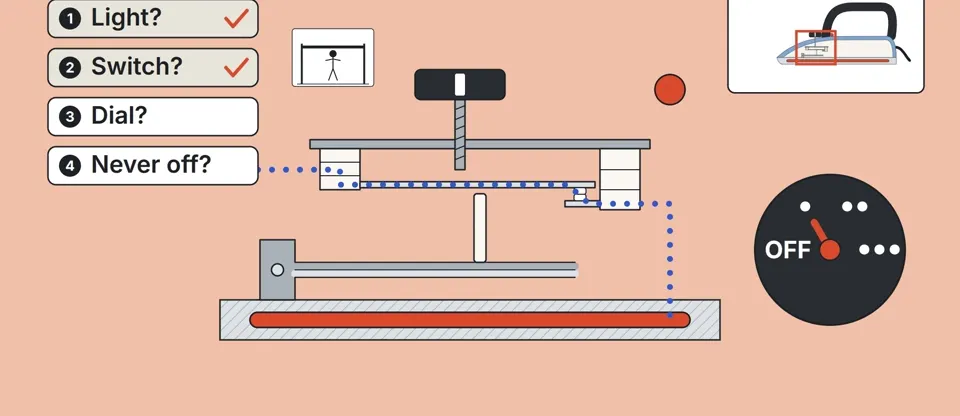
The dial turns a screw, and the screw moves the contacts. Turn it up, and the contacts sit higher, further from the pin. Now the strip must bend further before it can push them apart, and to bend further, it must get hotter. Think of a high jump bar. The dial raises the bar, so the strip has to reach higher. Unlike a jumper, the strip does not clear the bar. It pushes it out of the way.
The dial doesn't change the power, it sets how far the strip must bend.
On one dot, the contacts sit low, so the plate stays under about 120 degrees. On three dots, the strip must bend much further, and the plate gets up to about 210 degrees. It is the same heater with the same full power, just on for more of the time. So the answer to the guess is the second one. If you guessed more power, you are not alone. That is the dimmer idea, and most of us think it first.
Even so, the heat is not quite steady. The plate goes a little over the setting, then a little under. In older irons that were measured, it swung by ten or twenty degrees. That is small next to the gap between one dot and three, so "the same heat" really means a small wobble, kept inside a band.
Watch it yourself
So can you check this at home? Yes, with just your eyes.
With an adult, stand the iron up on its heel and never touch the plate. Set one dot, and count how long the light stays on and how long it stays off. Then set three dots. The off times should get shorter.
With one dot, the heater is on for only part of the time. If it is on for one second in every ten, that means a tenth of the power, on average. A hotter plate loses heat faster, so the strip cools and straightens sooner.
If it never stopped
What would happen if the two contacts got stuck together? The power would never stop. The strip would bend and bend, but the contacts would not part, so the plate would keep getting hotter and could scorch the cloth. That is why irons have a second safety part, which cuts the power if the plate gets far too hot.
In one breath
When your iron's light blinks, it is not broken. It is a strip of two metals bending as it warms, switching the heater off and on. The dial does not change the power; it sets how far the strip has to bend.